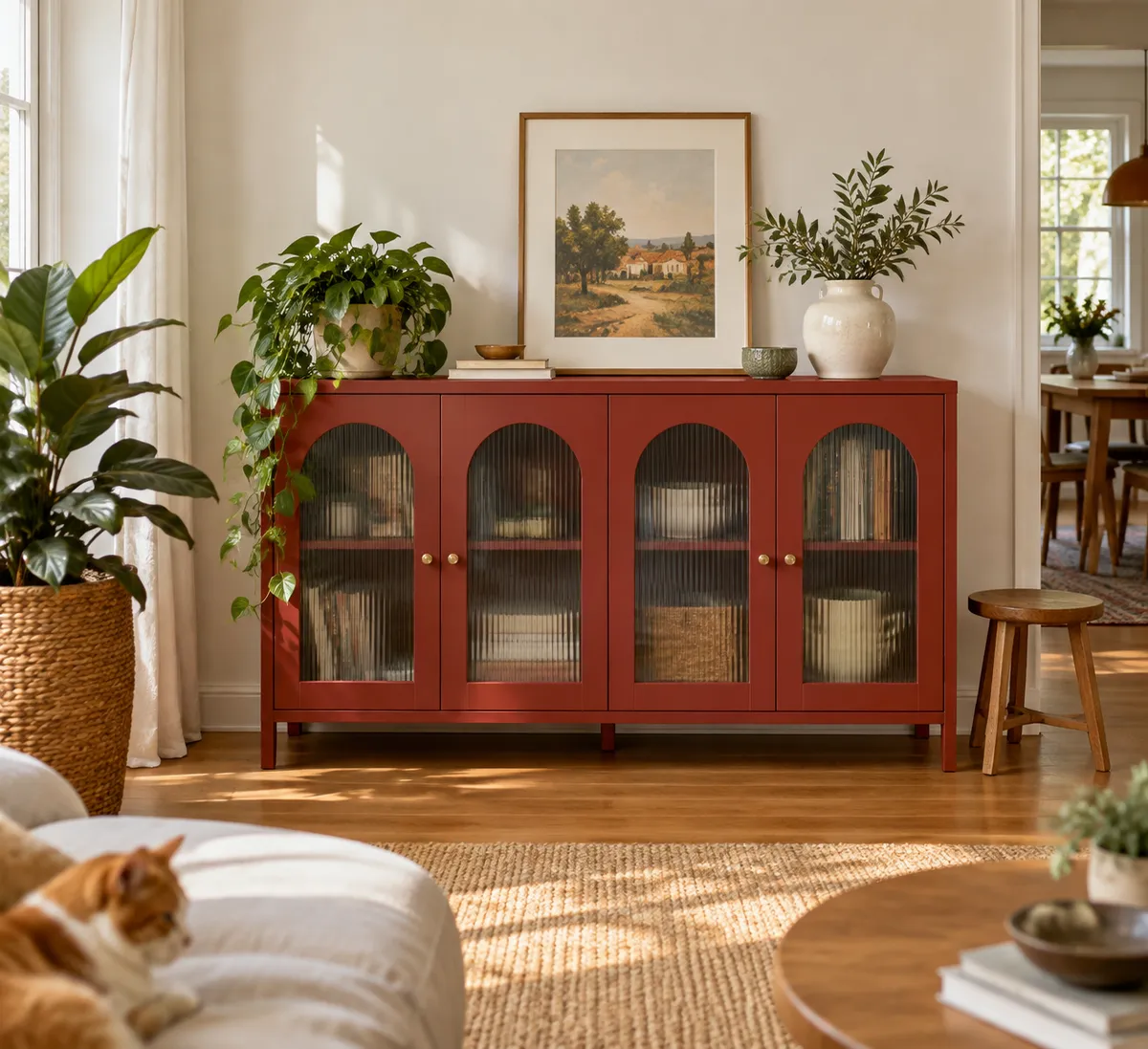
BuzzFeed has published a roundup of 20 pieces of storage furniture designed to blend into your decor rather than announce themselves as places to stash things. Its pitch, per the description: let everyone assume you bought it for the vibes, not because you've got clutter to hide.
That is a delightfully honest premise. It is also the whole genre of modern home organization in one sentence.
What the roundup actually promises
Per BuzzFeed, each of the 20 picks prioritizes aesthetic appeal while still solving a real organizational need. The timing makes sense: small-space living and minimalist design trends have made stylish storage a priority for renters and homeowners alike, and people increasingly want functional pieces that don't compromise their interior look.
A note on what I can and can't tell you here: the details on the individual 20 pieces aren't something I have in front of me, so I'm not going to describe, price, or rank specific products. For those, go to the original BuzzFeed list. What I can do is dig into the idea underneath it, because the idea is the useful part.
The "pass as decor" philosophy
There's a particular kind of home-magazine fantasy in which no one owns a junk drawer. The disguise-storage approach is the practical cousin of that fantasy. You accept that you own things (chargers, blankets, the mystery cables from a device you no longer have) and you give them a home that looks like a design choice.
It's hard not to see this as the grown-up version of shoving everything under the bed. The difference is intent: the object in the room is doing two jobs, and only one of them is on the brochure.
How to shop this way without regret
These are my takes, not BuzzFeed's, so treat them as a starting framework.
Start with what's actually cluttering you
Before you fall for anything, name the offender. Is it loose paper, throw blankets, shoes, remote-control sprawl? Disguised storage works best when it's matched to a specific category of stuff. Buying a handsome piece first and finding a purpose later is how you end up with a very good-looking container for more clutter.
Let one piece anchor the room
Small spaces reward consolidation. One substantial piece that hides a lot beats five tiny baskets that each hide a little. Styling around a single anchor also keeps the room calm, which is the entire reason you wanted hidden storage in the first place.
Decorate the top, hide the inside
If a piece looks like a console or a bench, treat it like one. A lamp, a plant, a stack of books on top sells the illusion. Leave the surface bare and it starts to read as furniture waiting for a job.
Be honest about your habits
Hidden storage only works if you'll actually use it. If opening a lid or door is a hassle, things will pile up on top instead. Choose the access style that matches how lazy you genuinely are on a Tuesday night. No judgment; we all have a Tuesday.
Budget vs. splurge, as a mindset
One angle the BuzzFeed brief floats is comparing budget and splurge picks within the category. Without specific products to compare, I'll just offer the principle: spend more on the piece you'll open daily and less on the one that mostly holds seasonal overflow. The daily-use item is where sturdy hardware and smooth operation pay you back.
Why this trend has legs
Room tours and before-and-afters have turned "hidden storage" into its own content category, and it's easy to see why: the reveal is satisfying. A messy corner becomes a clean one without anyone seeing where the mess went. It's a magic trick with a mortgage attached.
But the trick only works if the mess has an assigned seat. The best-looking piece in the world can't fix a household that never decided what belongs where.
The takeaway
The real flex of storage that doesn't look like storage isn't the furniture. It's the decision, made once, about where your stuff lives. Buy the pretty cabinet, sure. Just make sure it's the second-best thing you did for your clutter, right after admitting you had some.