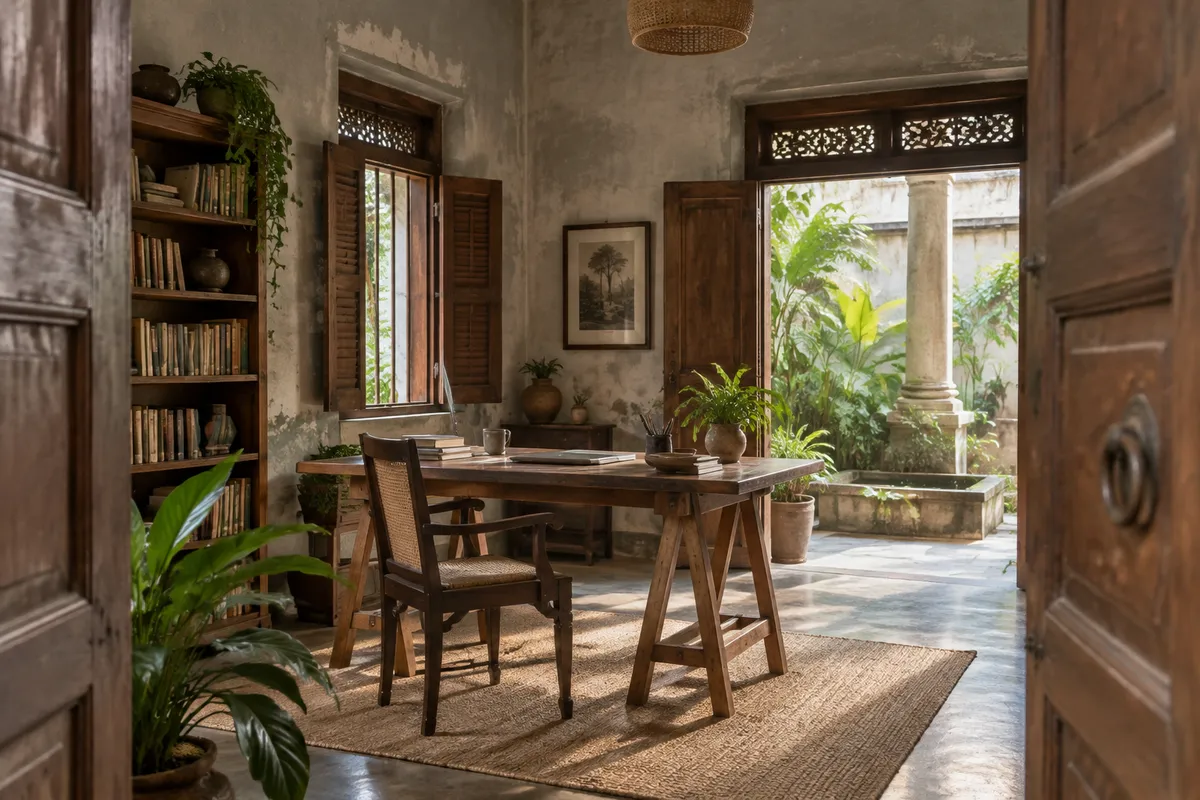
Architectural Digest India has rounded up five Indian homes that have been transformed into intimate workspaces, and the roster runs from a minimalist retreat in Mumbai to a nostalgic yet cosy studio in Chennai. The through-line, per the outlet, is that architects and creative teams are turning domestic layouts into offices with warmth, character and flexibility, and that post-pandemic workspaces are drifting away from sterile corporate environments toward spaces that feel personal, adaptive and rooted in place.
It's hard not to hear the faint echo of every sitcom where the characters inexplicably spend all day in an apartment that doubles as a workplace. Except here, the apartment is a Bandra bungalow, and the design is deliberate.
The Home Is the Office Now (and Nobody Is Wearing a Lanyard)
The article lists five projects by title: "Extending Office Hours," "Home Sweet Office," "The Charm Of A Bandra Bungalow," "Rising From The Ruins" and "Reviving The Haveli." Beyond those headings and the Mumbai and Chennai examples in the description, I can't tell you the floor plans, the studios behind them or the materials used, because that detail isn't in what we have to work from. What the titles do tell us is telling enough.
Take the names as a mood board. A bungalow with charm. A haveli being revived. Something rising from ruins. None of that reads "open-plan floor with a ficus and a kombucha tap." These are buildings with history, and the pitch is that the history is the amenity.
Why Offices Are Getting Domestic
The outlet frames the timing around hybrid work reshaping office culture. Businesses, it says, are rethinking what a workplace should feel like, and many are choosing comfort, heritage and human scale over glass-tower uniformity.
Here's my take: the pandemic taught a lot of people that a desk can live next to a window with actual weather in it, and that they liked that. Once you've worked from a sunny corner of a home, a beige cubicle farm has to justify itself. Converting a house into an office is one way to answer that, by bringing the thing people missed (light, texture, a room with a personality) into a space you still commute to.
Adaptive Reuse: The Practical Flex
There's a sensible, unglamorous argument under the aesthetics. In India's dense cities, the outlet notes, adaptive reuse of homes offers a timely design response to sustainability, preservation and changing work habits. Reusing a building that already exists, rather than razing it for something shinier, is the sort of thing that sounds like a lifestyle choice and is also, plainly, a resource decision.
The "Rising From The Ruins" and "Reviving The Haveli" entries suggest the trend goes beyond tidy bungalows into properties that needed real rescuing. Again, specifics of those restorations aren't something I can vouch for, but the framing is clear: preservation and productivity can share an address.
Steal These Ideas for Your Own Corner
You probably don't own a haveli. (If you do, hello, and please invite us.) But the domestic details the article points to translate at smaller scale:
- Light. Park the desk where the day actually happens, not where the outlet happens to be.
- Texture. Old rooms have it by default. Fake it with wood, fabric and anything that isn't laminate.
- Outdoor-adjacent space. Courtyards and terraces are among the features the article highlights as making workplaces more creative and humane. A balcony chair counts as a modest cousin.
- Human scale. Smaller, flexible rooms over one giant uniform floor. Your spare room is not a failure of ambition; it's the trend.
The Takeaway
For years, the aspirational office was a tower made of glass that looked identical in every city. The quiet joke of this trend is that the new status symbol is a room that looks like someone has lived in it. If the best workplace of the decade turns out to be a converted house, it's because the house was already doing the hard part: making people want to stay a while.